

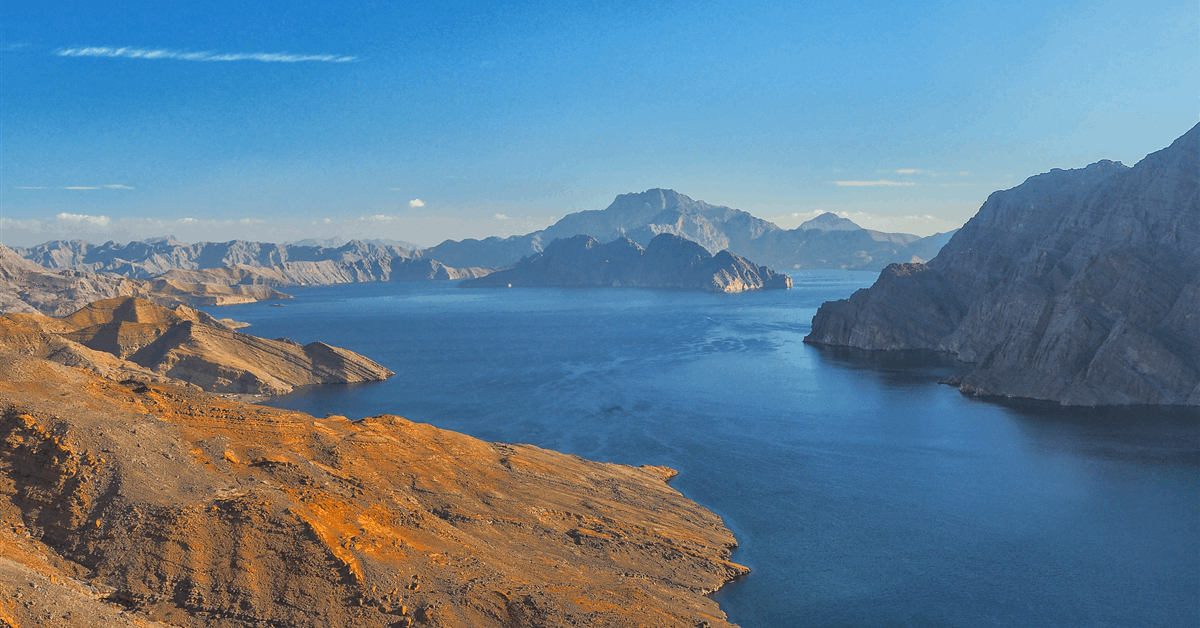




Visitors by means of the Strait of Hormuz remained largely frozen amid rising tensions, as Iran attacked ships and the US began a plan to information vessels out of the very important waterway.
Exercise was restricted to a handful of vessels, principally linked to Iran, as of early afternoon in London on Monday. US President Donald Trump’s proposal to assist stranded ships out of the Persian Gulf, framed as a “humanitarian gesture,” left delivery executives on the lookout for particulars because the safety outlook stays unsure.
In the meantime, US Central Command mentioned on X that two American-flagged service provider vessels efficiently navigated the strait, noting that the army is actively working to revive business circulate. There have been 5 US flagged business vessels within the Persian Gulf on the finish of February, however none of them have turned on their Automated Identification System sign for weeks.
- Advertisement -

The newest US plan comes after days of stalemate over Hormuz transits and the broader struggle within the Center East. Tens of millions of barrels of oil and different merchandise are caught contained in the Persian Gulf as Iran makes an attempt to tighten its grip on the chokepoint. The nation’s semi-official Tasnim information company reported on Monday an expanded management zone throughout the strait, stretching so far as the borders with the United Arab Emirates.
Latest ship actions underscore the uncertainty. Early Monday, a Panama-flagged bulk service and two Chinese language-owned vessels deserted outbound voyages towards the strait and turned west. The diversions coincided with a UKMTO alert warning of unidentified radio instructions instructing ships to clear the realm, highlighting the area’s unpredictable dangers.
Business site visitors on Monday morning remained sparse. Vessel-tracking knowledge present simply two transits: an Iran-linked liquefied petroleum fuel service exiting the Gulf and an India-linked regional feeder containership coming into.
Iranian media recommended that Tehran has expanded its outlined management zone throughout the strait, from south of Mount Mobarak to Fujairah, and from west of Qeshm Island to Umm al Quwain. The transfer additional complicates navigation in one of many world’s most important waterways.
Ship Actions
The subdued exercise follows an equally sluggish Sunday, when just one bulk service took the outbound route alongside a handful of smaller regional vessels, together with three small cargo ships and a bitumen service.
Ships transiting Hormuz with lively AIS indicators over the previous day had been confined to the slim northern lane authorized by Tehran.
Latest Iran-linked departures have largely stalled within the Gulf of Oman. It stays unclear whether or not these vessels are following regional buying and selling patterns or are being held up by a US naval blockade positioned additional east.
The Indian containership’s Monday entry into the Persian Gulf follows the arrival of an Iran-linked LPG vessel and a bulk service a day earlier.
The US presence might also be distorting the site visitors image. Iran-linked vessels coming into or leaving the Gulf could possibly be switching off AIS indicators to keep away from detection, making it more durable to trace flows in actual time. In consequence, transit counts might later be revised upward when ships reappear farther from high-risk waters.
Even earlier than the newest US restrictions, it was frequent for Iran-linked vessels to go darkish when approaching Hormuz. Alerts had been typically not restored till nicely into the Strait of Malacca—round 13 days’ crusing from Iran’s Kharg Island.
NOTES:
As a result of vessels can transfer with out transmitting their location till they’re nicely away from Hormuz, automated positioning indicators had been compiled over a big space masking the Gulf of Oman, the Arabian Sea and the Purple Sea to detect people who might have departed or entered the Persian Gulf.
When potential transits are recognized, sign histories are examined to find out whether or not the motion seems real or is the results of spoofing — the place digital interference can falsify the obvious place of a ship.
Some transits might not have been detected if vessels’ transponders haven’t been switched again on. Iran-linked oil tankers typically steam from the Persian Gulf with out broadcasting indicators till they attain the Strait of Malacca about 10 days after passing Fujairah within the UAE. Different ships could also be adopting comparable techniques and gained’t present up on monitoring screens for a lot of days.
This tracker will probably be printed throughout heightened tensions involving Iran, and goals to seize site visitors for all courses of business delivery.
Generated by readers, the feedback included herein don’t replicate the views and opinions of Rigzone. All feedback are topic to editorial assessment. Off-topic, inappropriate or insulting feedback will probably be eliminated.

