





This isn’t a textbook oil shock; it’s a multidimensional disruption.
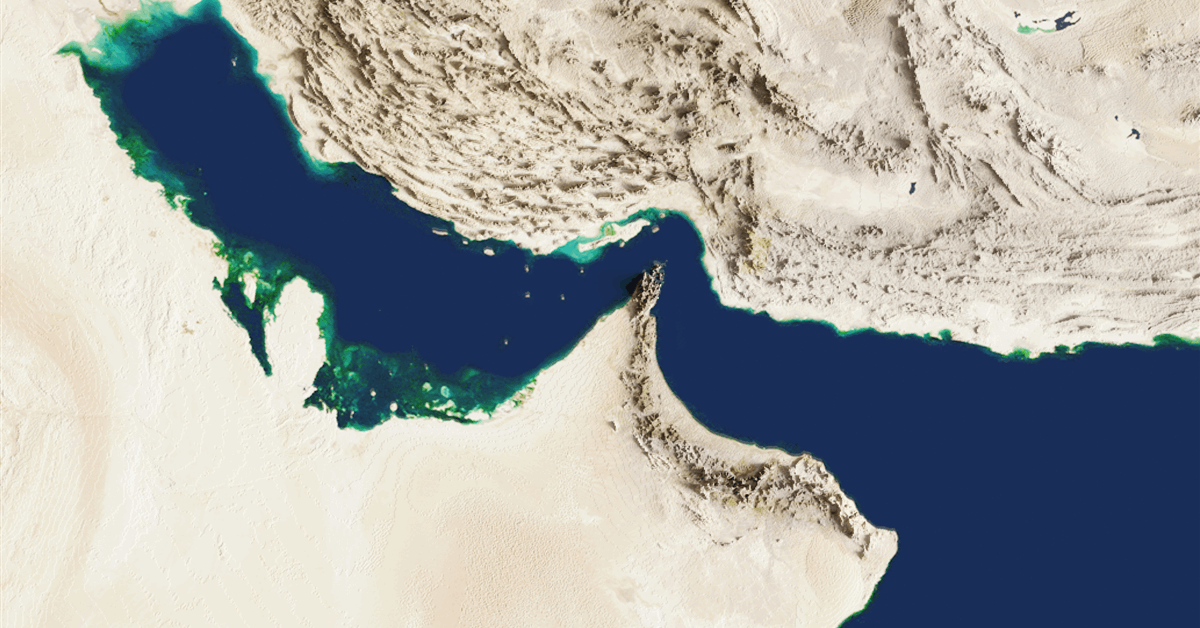
That’s what EY-Parthenon Chief Economist Gregory Daco mentioned in an announcement despatched to Rigzone late Monday, including that “the magnitude and period of move disruptions by way of the Strait of Hormuz and the chance of rising harm to grease manufacturing, refining capability, LNG fields, and liquefaction infrastructure recommend a extra persistent inflationary impulse, extending past a short-lived vitality worth spike”.
“Whereas the U.S. stays comparatively insulated in contrast with Europe and Asia and will see some offset from elevated shale manufacturing, the web macroeconomic impact is prone to be adverse,” he added.
- Advertisement -

Within the assertion, Daco revealed that EY-Parthenon now expects Brent crude oil to common $88 per barrel within the second quarter of this yr, which he highlighted is round $20 per barrel increased than the corporate’s pre-conflict baseline. EY-Parthenon sees the commodity dropping to $75 per barrel within the third quarter and $72 per barrel within the fourth quarter, in response to Daco, who highlighted that this was nonetheless $7 per barrel increased than the corporate’s pre-conflict projection.
Daco went on to warn within the assertion that, “in a extra extreme and extended Center East escalation, with oil costs sustained above $100 per barrel, elevated costs throughout different key commodities, tighter monetary situations, and a sharper deterioration in confidence, U.S. inflation may rise towards 5 % whereas actual GDP development could possibly be decreased by multiple share level, considerably heightening recession dangers”.
In a BMI report on the U.S.-Iran battle despatched to Rigzone by the Fitch Group on Tuesday, analysts at BMI, a Fitch Options firm, highlighted that an “trade heatmap” it has created “illustrates far reaching shockwaves”.
“Because the U.S.-Iran battle passes the three week mark, we draw collectively the influence of the battle throughout industries regionally and at a world degree, and assess the implications of an prolonged battle situation throughout industries globally,” the analysts said within the report.
“GCC [Gulf Cooperation Council] international locations are most closely uncovered to the impacts of the battle through heavy industries (particularly vitality) and client dealing with sectors. Notably, the severity of regional disruption up to now means that there’s little distinction between the heatmap for the present and prolonged situation,” they added.
“Globally, probably the most extreme disruption is centered round vitality and provide chain bottlenecks, as a result of increased costs and provide disruption. Underneath an prolonged situation, client dealing with industries resembling tourism, hospitality and client staples, as effectively
as agricultural, metals and minerals commodities transfer to excessive disruption globally,” they warned.
The BMI analysts went on to state that, “Asia, carefully adopted by Europe, have the best publicity throughout key industries, primarily through vitality prices, inflationary pressures and provide chain disruption”.
“Americas and Africa are experiencing solely low to reasonable impacts throughout industries below the present situation of a restricted 4 week battle, nonetheless this is able to shift to reasonable common influence below our prolonged battle situation,” they added.
Skandinaviska Enskilda Banken AB (SEB) Chief Commodities Analyst Bjarne Schieldrop, famous in a SEB report despatched to Rigzone this morning that there have been “wild strikes yesterday” within the oil market.
“Brent crude traded to a excessive of $114.43 per barrel and a low of $96.0 per barrel and closed at $99.94 per barrel yesterday,” Schieldrop identified.
Schieldrop warned within the report that if “hardliners stay in energy” in Iran, then “oil ache ought to lengthen all the way in which to U.S. midterm elections”.
“The regime has performed its ‘oil-weapon’ (closing or choking the Strait of Hormuz). It’s utilizing it to attain political targets – deterrence: it must be so politically and economically costly to assault Iran that it received’t occur once more sooner or later,” he added.
“The best Brent crude oil closing worth because the begin of the battle is $112.19 per barrel final Friday. Compared the 20-year inflation adjusted Brent worth is $103 per barrel. So, Brent crude final Friday at $112.19 per barrel isn’t a surprisingly excessive worth,” he famous, stating that’s “nonetheless far beneath the nominal excessive of $148 per barrel from 2008 which is $220 per barrel if inflation adjusted”.
“So, as soon as in a lifetime Iran prompts its strongest weapon. The oil weapon. It wants to point out the ability of this weapon and it must reap political good points. Getting Brent to $112 per barrel and intraday excessive of $119.5 per barrel (9 March) isn’t a show of the ability of that weapon. And it’s not a deterrence in opposition to future assaults,” Shieldrop warned.
The SEB analyst went on to state that, if the hardliners stay in energy in Iran, then the Strait of Hormuz will doubtless stay choked all the way in which to U.S. midterm elections and Brent crude will at a minimal go above the historic nominal excessive of $148 per barrel from 2008.
Rigzone has contacted the White Home and the Iranian Ministry of Overseas Affairs for touch upon the SEB report. On the time of writing, neither have responded to Rigzone.
To contact the creator, electronic mail andreas.exarheas@rigzone.com

