





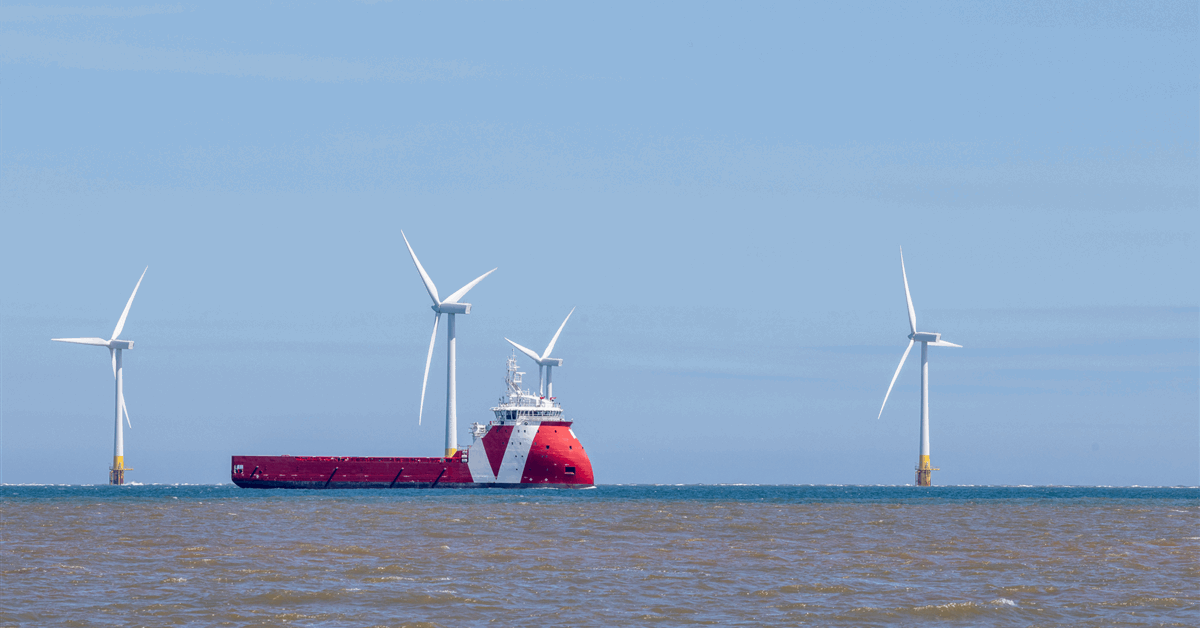
Two research commissioned by ScottishPower Renewable Power Restricted, an Iberdrola firm, say that offshore charging for battery-powered crew switch and repair operation vessels is on the horizon for future wind farms.
The research – performed by MJR Energy & Automation and Oasis Marine – are the final of three commissioned by ScottishPower Renewables to research strategies for reducing greenhouse fuel (GHG) emissions from offshore wind farm operations. The research bolstered preliminary conclusions that using battery-powered Service Operation Vessels (E-SOVs) for offshore operations is technically viable, permitting them to stay at sea for extended durations, ScottishPower Renewables stated in a media launch.
The 2 research additionally seemed on the potential of decarbonizing offshore operations utilizing electrical crew switch vessels (CTVs). Research discovered that this feature is technically and operationally possible for windfarms near shore.
- Advertisement -

“These newest research have the potential to assist the business take a step nearer to a brand new period for offshore windfarm operations – not simply right here within the UK, however proper throughout the globe”, Ross Ovens, ScottishPower Renewables’ Managing Director for Offshore, stated. “The precious depth and perception this analysis provides – no matter whether or not you’re contemplating an SOV or CTV working mannequin – might assist inform future windfarm operations because the nation continues to construct the inexperienced technology we have to meet the anticipated doubling of electrical energy demand”.
In each eventualities, windfarms would additionally profit environmentally and economically, with a big discount in each GHG emissions in addition to gasoline prices.
The MJR examine discovered {that electrical} options are well-suited for offshore windfarm operations, permitting for normal charging at manufacturing websites and shore-based quays. It additionally famous that O&M electrical vessels will quickly be cheaper than Marine Gasoline Oil (MGO) options, with working bills already aggressive for SOVs and totally aggressive for CTVs in just a few years.
The Oasis Marine examine discovered that utilizing electrical CTVs, powered by Oasis Energy Buoys in windfarms, protects towards risky fossil gasoline costs and excessive prices of inexperienced fuels. The case examine in contrast three electrical CTVs to diesel vessels, revealing potential financial savings of 140,000 tonnes of carbon dioxide (CO2) emissions and round GBP15 million ($20.3 million) in gasoline prices over the windfarm’s 25-year lifetime.
The findings are being shared by the Operation Zero initiative, which was launched at COP26 in Glasgow and brings collectively builders and provide chain firms dedicated to creating zero-emission operations and upkeep vessels a actuality, ScottishPower Renewables stated.
“By means of research like these, we can study, innovate and speed up the adoption of zero-emission vessels and applied sciences to realize a sustainable maritime future”, Leo Hambro from the Operation Zero Steering Committee stated.
To contact the writer, e-mail andreson.n.paul@gmail.com
Generated by readers, the feedback included herein don’t replicate the views and opinions of Rigzone. All feedback are topic to editorial assessment. Off-topic, inappropriate or insulting feedback might be eliminated.