


The battle between the US and Israel in opposition to Iran has the potential to be the biggest oil provide disruption in historical past if oil flows by way of the slender Strait of Hormuz stay low or come to a halt.
That’s what was said in an evaluation piece despatched to Rigzone by the S&P International crew late Monday. The evaluation piece was penned by Jim Burkhard – who heads S&P International Power crude oil analysis – and the S&P International Power Crude Oil Markets crew.
“Initially, vitality infrastructure had not been focused by Iran, however that has modified with assaults on amenities in Saudi Arabia and Qatar,” the evaluation piece famous.
- Advertisement -

“This provides a crucial additional dimension to the shock wave hitting oil and fuel markets,” it added.
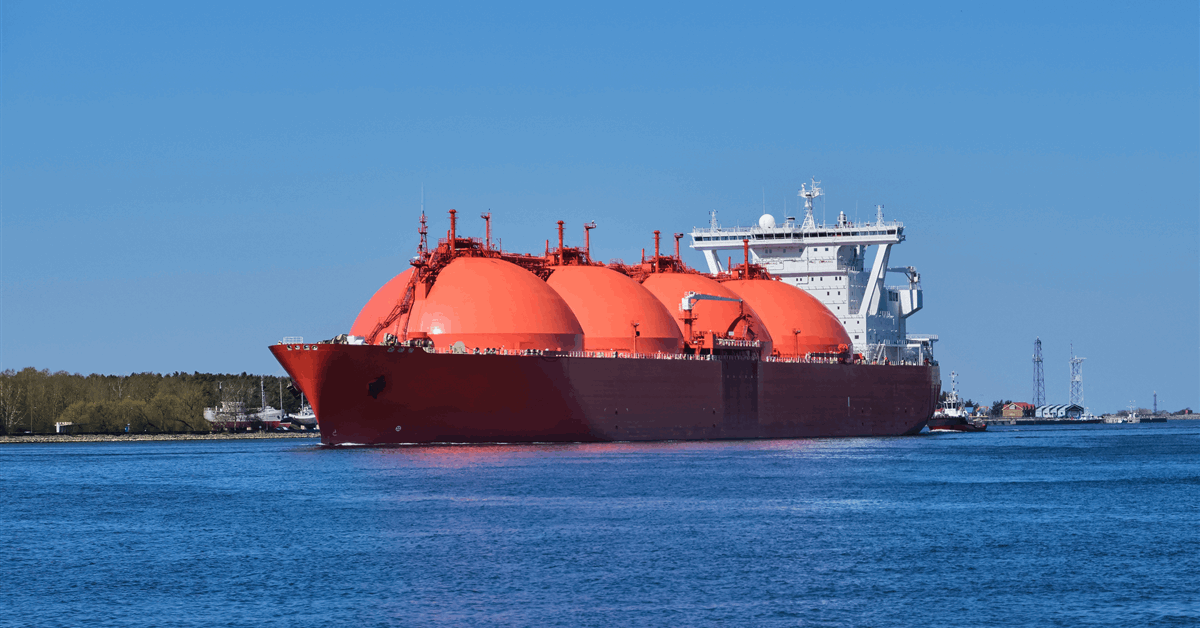
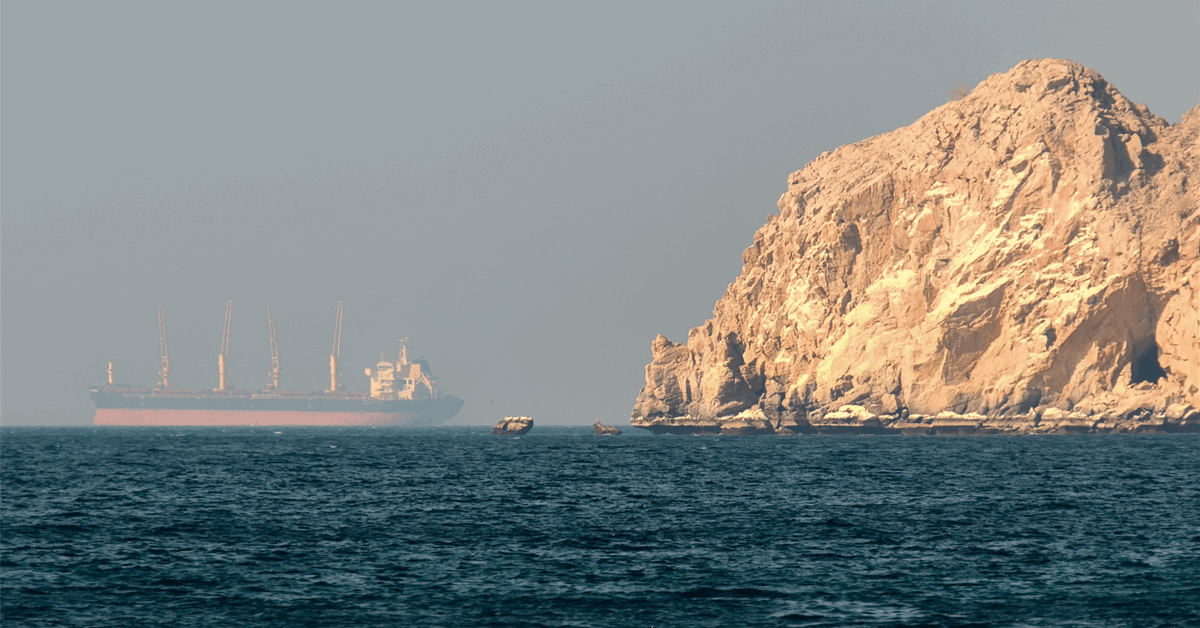
S&P International Power Commodities at Sea information reveals that, on March 1, 5 oil tankers transited the Strait, the evaluation highlighted. This compares with round 60 tankers per day not too long ago, in response to the evaluation.
Within the first two months of this yr 20.8 million barrels per day of crude oil and merchandise was shipped by way of the Strait of Hormuz, with 82 % going to Asian markets, the evaluation famous, including that about 18 % of world LNG provide additionally transits the Strait as nicely.
“The lack of a part of this vitality provide may gasoline monetary and financial shocks,” the piece warned.
“If tankers halt transiting the Strait, as a lot as 15 million barrels per day of crude oil and merchandise – most of which is crude oil – are in danger, with the exact quantity depending on the utilization of Saudi and Emirati pipelines that bypass the Strait of Hormuz,” the evaluation added.
“A provide disruption even on the mid-range of volumes in danger – seven to eight million barrels per day of crude and merchandise – can be greater than the quantity that was initially in danger when Russia invaded Ukraine or the quantity lower off from the market following Iraq’s 1990 invasion of Kuwait,” it continued.
The evaluation highlighted that, earlier than the outbreak of hostilities, the S&P International Power outlook anticipated international crude oil manufacturing to exceed demand by 1.4 million barrels per day within the first quarter of 2026 and by a median of 1 million barrels per day for the yr total.
The evaluation famous, nonetheless, that “the discount in tanker site visitors and the concentrating on of vitality infrastructure have the potential for a shift – and probably a historic one – from a surplus to a big deficit, which might imply costs excessive sufficient to ration scarce provides and decrease demand”.
Within the evaluation, Burkhard identified that “the period of the battle is crucial”.
“If the discount in tanker site visitors continues for per week or so will probably be historic. Past that it will be epochal for the oil market with costs rising to ration scarce provide and impacts in monetary markets,” he warned.
“Whereas not sure, the danger is actual. The potential affect on international oil provide and the world financial system might be so important that it’s tough to think about a worst-case situation – no tankers transiting the Strait of Hormuz – lasting greater than a short time, but it surely may,” he continued.
Daniel Yergin, Vice Chairman, S&P International, stated within the evaluation piece, “key questions are how a lot provide will likely be misplaced, for the way lengthy, and the way do main powers react?”.
“{That a} situation able to inflicting the best oil provide upheaval in historical past is even into consideration is, by itself, alarming,” Yergin added.
In a BMI report despatched to Rigzone by the Fitch Group on Tuesday morning, analysts at BMI, a Fitch Options firm, highlighted that, on February 28, the U.S. and Israel launched a large-scale navy operation in opposition to Iran.
“Preliminary developments level to a short-lived however expansive marketing campaign, with the specter of additional escalation within the coming weeks,” the analysts famous.
“For international oil and fuel markets, the battle introduces danger by means of two main channels: injury to bodily infrastructure and disruption to transit within the Strait of Hormuz,” they added.
Within the report, the analysts famous that maritime site visitors “has dropped sharply and not less than three tankers have been attacked” within the Strait.
“Finally, the magnitude and persistence of any worth strikes will hinge on the dimensions and period of disruptions within the strait and the extent of any injury to infrastructure,” the analysts stated.
The BMI analysts said within the report that, relying on how the battle evolves, they see three pathways for crude, “broadly aligning with our Nation Danger crew’s three pathways for navy escalation”.
“At the moment we’re largely in our low case situation, with sure spillovers into the mid case,” they stated.
In its low case situation, BMI anticipates a “short-lived, massive marketing campaign, however with higher regional spillover, [and] partial/full Hormuz disruption”, the report confirmed. This situation sees a settled oil worth buying and selling vary of between $75 and $90 per barrel.
BMI’s mid case situation additionally anticipates a “short-lived, massive marketing campaign, however with higher regional spillover, [and] partial/full Hormuz disruption”, however this situation tasks a settled oil worth buying and selling vary of between $90 and $110 per barrel, the report outlined. On this situation, “direct tanker strikes, vessel seizures, swarm techniques or restricted mine-laying drive short-term pauses whereas lanes are assessed” and infrastructure outages “turn out to be extra consequential”.
Underneath BMI’s excessive case situation, there’s a “extended, large-scale marketing campaign, higher regional spillover, [and] partial/full Hormuz disruption”. This case sees a settled buying and selling vary between $110 and $130 per barrel and warns of a danger of costs leaping over $130 per barrel. On this situation, industrial transit of the Strait “turns into commercially non-viable even when not formally ‘closed’” and infrastructure sees “intensive and systemically important outages”.
In a separate BMI report despatched to Rigzone by the Fitch Group on Tuesday, BMI analysts stated they’re sustaining their 2026 Brent crude forecast at $67 per barrel, “regardless of a stronger than anticipated worth efficiency in Q1 and the outbreak of navy hostilities between the U.S., Israel, and Iran”.
“Whereas the distribution of outcomes has widened materially and near-term upside dangers have intensified, our analysts’ core view for a short-lived, albeit massive, marketing campaign is in step with a short spike in oil costs in March, adopted by speedy retracement heading into Q2, as geopolitical danger premia fade and investor focus shifts again in direction of unfastened underlying fundamentals,” BMI analysts said in that report.
“It will restrict the affect on costs from an annual common perspective,” they added.
The analysts famous in that report that they’re factoring in a buying and selling vary of round $75 to $90 per barrel in March, “bringing the Q1 common to round $71 per barrel”.
“In Q2, we forecast a far decrease common, at $63 per barrel,” they stated.
“This view makes a number of key assumptions, most notably a speedy normalization of transit by means of the Strait of Hormuz and no materials lasting injury to Center East Gulf export infrastructure,” they famous.
“Stripping away conflict-related disruptions, the worldwide oil market appears oversupplied for H1 and the lack of the geopolitical danger premia surrounding Iran would seemingly be the set off for a pointy sell-off in Brent,” they continued.
“Over H2, we count on a gradual restoration in costs, and a marked discount in volatility, as oil demand continues to rise and financial momentum and market sentiment enhance,” they said.
“That stated, whereas the dangers to our $67 per barrel common forecast have been beforehand skewed to the draw back, they now skew to the upside, given the potential for wider escalation and bigger and longer-lasting conflict-related disruptions,” the analysts went on to state.
Rigzone has contacted the White Home, Israel’s Ministry of Overseas Affairs, and the Iranian Ministry of Overseas Affairs for touch upon the S&P evaluation piece and the BMI reviews. On the time of writing, not one of the above have responded to Rigzone.
To contact the creator, electronic mail andreas.exarheas@rigzone.com