


Weaponizing the Strait of Hormuz shouldn’t be an act of aggression towards one nation; it’s financial terrorism towards each nation.
That’s what Ahmed Al Jaber, ADNOC’s managing director and group CEO, in addition to UAE Minister of Trade and Superior Expertise, Masdar Chairman, and XRG Government Chairman, mentioned in a press release made at CERAWeek, which was despatched to Rigzone this week.
“Vitality safety isn’t just a slogan, it’s the distinction between lights on and lights off,” Al Jaber identified within the assertion.
- Advertisement -

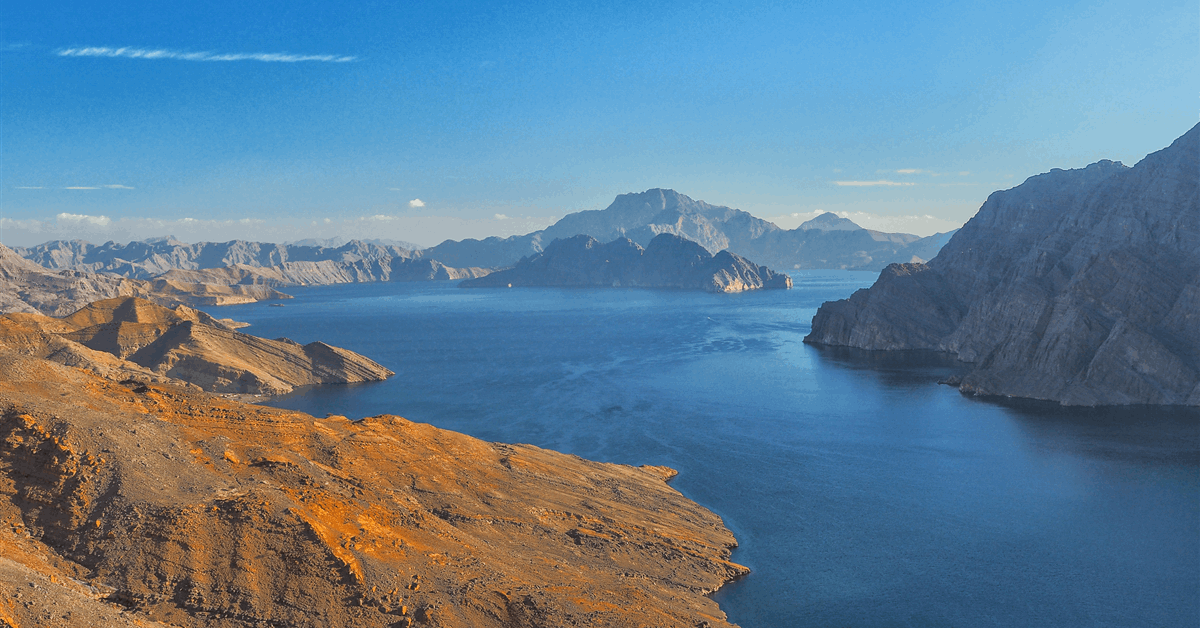
“Twenty-one miles broad. Twenty million barrels a day. Practically a fifth of the world’s oil and fuel. Over a 3rd of the world’s fertilizer. Virtually 1 / 4 of the world’s petrochemicals and vital quantities of business metals. Briefly, a lot of the oxygen of the worldwide financial system runs by means of a single throat. But, Iran believes that choking it’s a suitable technique,” he added.
Al Jaber said that, when Hormuz is squeezed, the strain is straight away felt world wide.
“In simply three weeks, the value of oil has risen by 50 %. That is elevating the price of dwelling for individuals who can least afford it and slowing financial progress in every single place. From factories, to farms, to households world wide, the human price is mounting by the day,” he mentioned.
“So let me be completely clear. Weaponizing the Strait of Hormuz shouldn’t be an act of aggression towards one nation; it’s financial terrorism towards each nation,” he added.
“No nation ought to be allowed to carry Hormuz hostage, not now, not ever. And whereas we respect all efforts to stabilize markets and cut back costs, this isn’t a provide challenge. It’s a safety challenge, and it has just one sturdy reply, preserving the Strait open. We can’t commerce our manner out of this disaster,” he continued.
In his assertion, Al Jaber famous that ADNOC “took hits no civilian enterprise, not to mention one centered on delivering vitality to the world, ought to ever should take”.
“We’re deploying extraordinary measures to maintain our individuals secure and to verify, as a lot as potential, each buyer and each stakeholder will get what they want,” he mentioned.
“We’ll proceed to defend our nation and our lifestyle. Actually, this expertise has solely bolstered our mannequin of pragmatic progress, rooted in realism not ideology, regular in its course, sensible in its method and relentlessly centered on outcomes,” he continued.
Rigzone has contacted the Iranian Ministry of Overseas Affairs for touch upon Al Jaber’s assertion. On the time of writing, the ministry has not responded to Rigzone.
In a BMI report despatched to Rigzone late Tuesday by the Fitch Group, analysts at BMI, a unit of Fitch Options, said that the marketplace for Center Japanese crude “has suffered extreme bodily dislocation, largely as a consequence of disruptions within the Strait of Hormuz, driving an aggressive run up in costs”.
“Differentials have been widest for crudes with exit factors exterior the strait, equivalent to Murban and Oman,” they mentioned.
The BMI analysts famous within the report that the marketplace for Brent “has been cushioned by the benchmark’s composition and geographical location, regional stock buffers and coverage responses to the conflict”.
“As predominantly a paper market, it has additionally been closely swayed by Trump’s makes an attempt to speak down oil costs,” they added.
West Texas Intermediate crude costs, the BMI analysts said that the U.S. market “is well-insulated, as a consequence of ample home provides and large-scale releases from the strategic petroleum reserve”.
“The specter of an export ban (nonetheless unlikely) can also be impacting on sentiment,” they mentioned.
The BMI analysts revealed within the report that their Brent crude forecast is about at an annual common of $70 per barrel for 2026.
“This aligns with our Nation Threat workforce’s base-case state of affairs of a four-week battle and assumes a comparatively fast post-conflict restoration, with restricted lasting injury to vital upstream manufacturing and export infrastructure and a two to 4 week normalization of flows by means of the Strait of Hormuz,” the analysts mentioned.
“Consequently, we see costs toppling from a median of $78 per barrel in Q1 (up from $76 per barrel within the 12 months up to now), to $66 per barrel in Q2, earlier than edging increased later within the 12 months,” they added.
To contact the creator, e-mail andreas.exarheas@rigzone.com

